Medication & Safety
Return and Refund Policy: What to Check Before You Buy
A clear return and refund policy tells you a lot about a seller before anything goes wrong. Here is what to check before...
How under-the-tongue and injected GLP-1 approaches differ, and what to consider before starting any program.
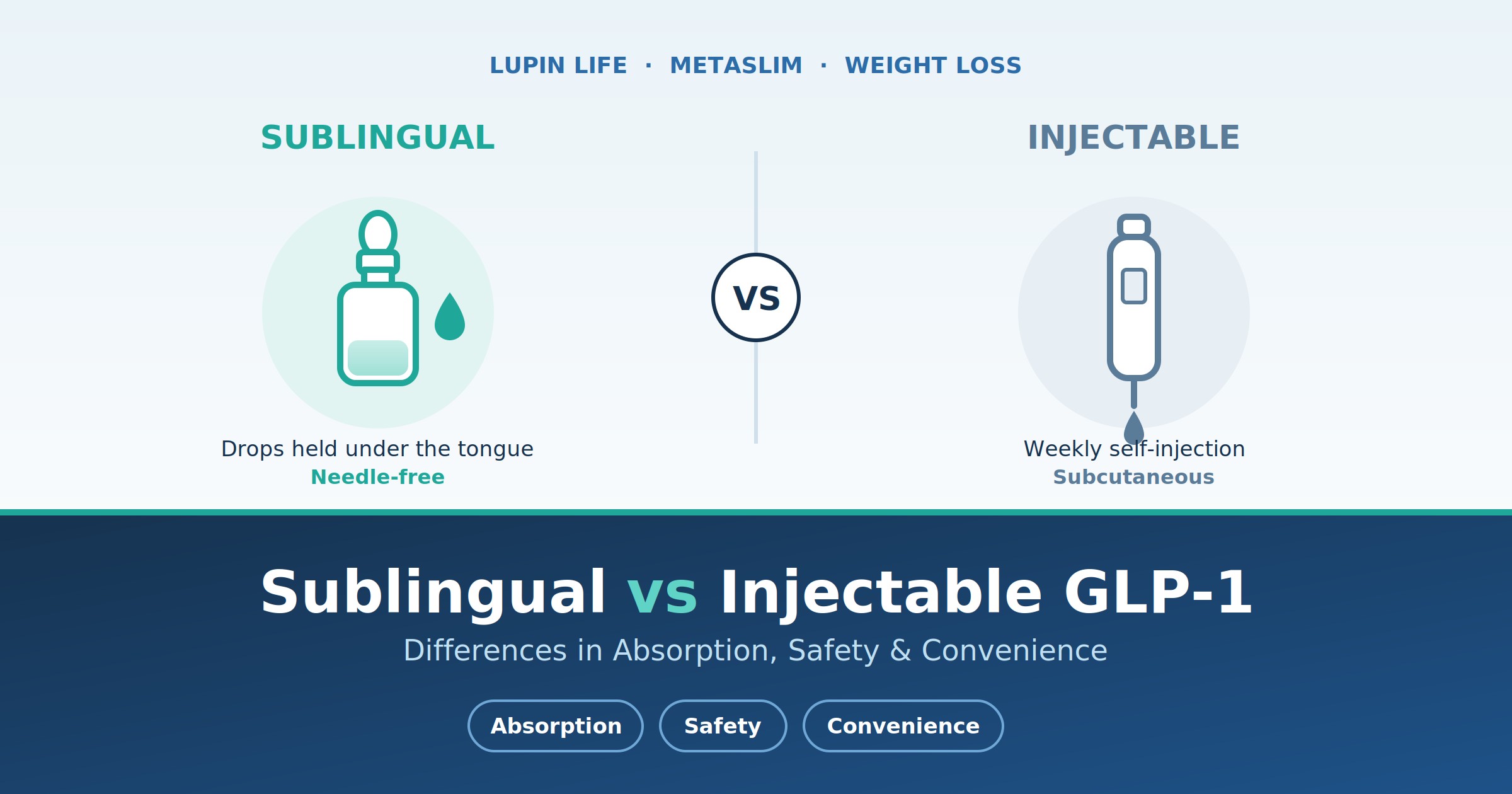
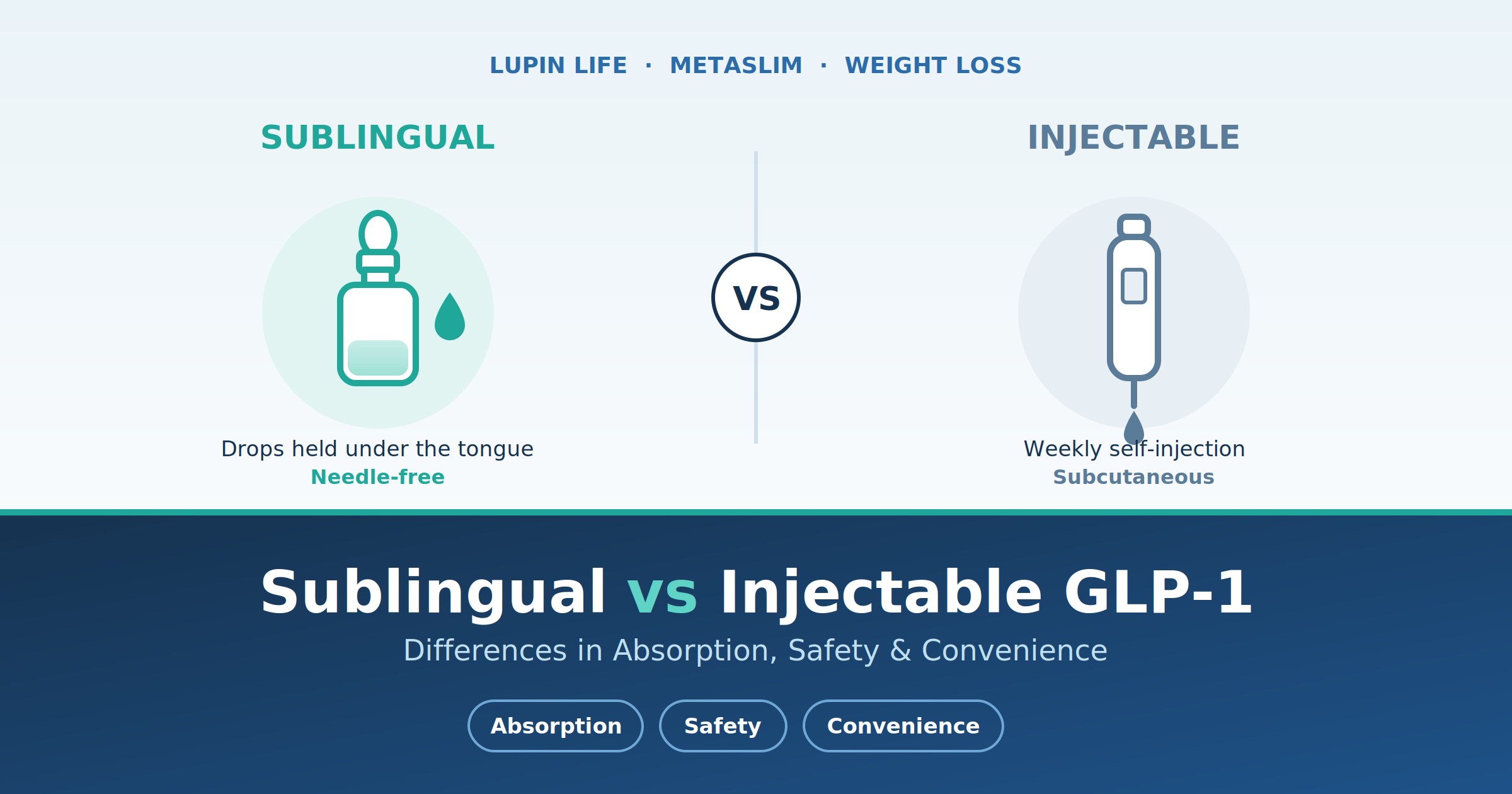
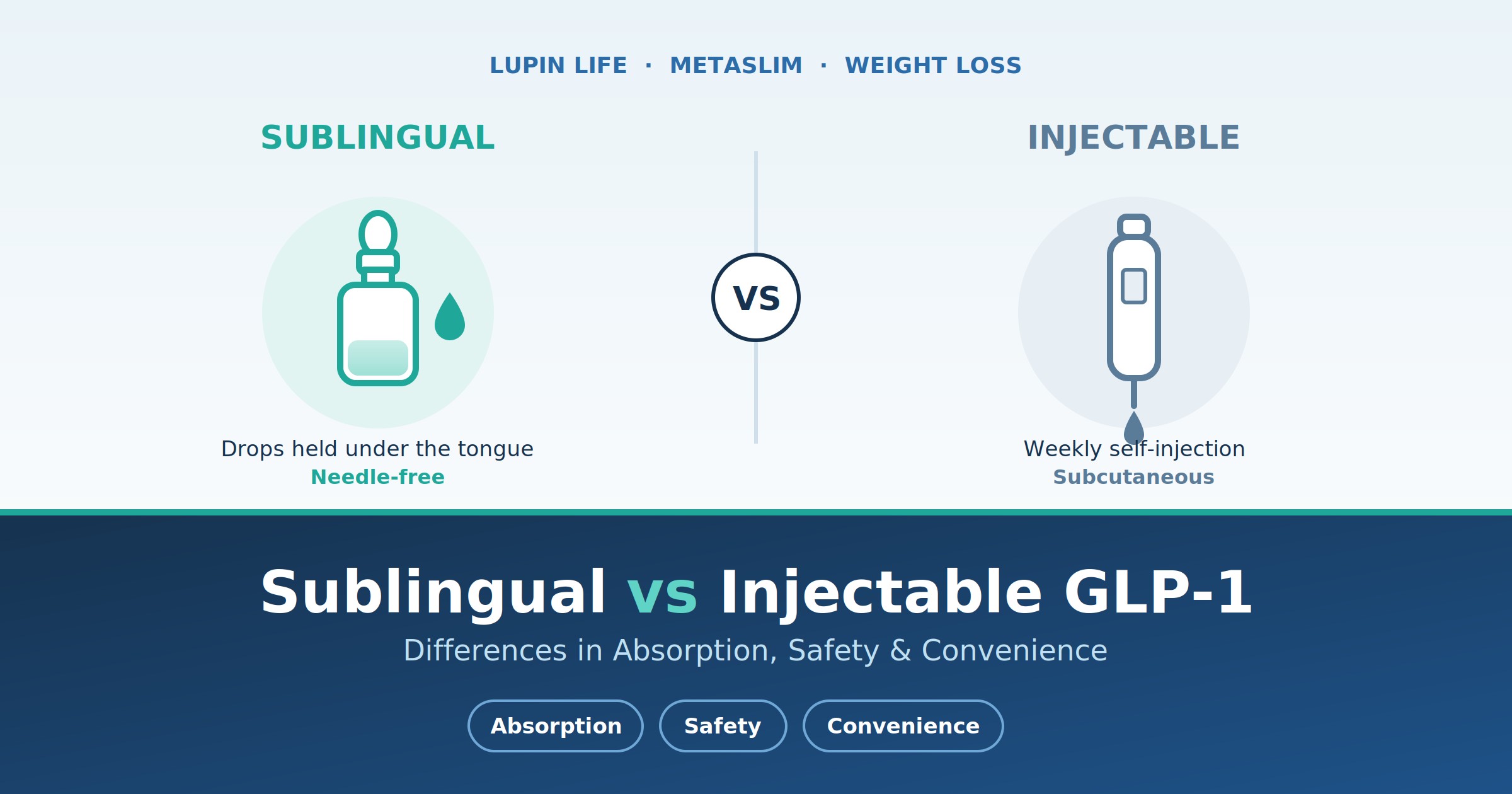
Sublingual and injectable GLP-1 deliver the same goal through different routes. Learn how absorption, convenience, and safety compare so you can ask informed questions.
GLP-1 has transformed the conversation around weight management, but many people are confused by the different ways it can be delivered. Two common routes are injectable and sublingual, meaning under the tongue.
This article explains how these approaches differ in absorption, convenience, and safety, so you can have a more informed discussion with your healthcare provider. It is educational and not a substitute for medical advice.
Whether delivered by injection or under the tongue, the purpose of a GLP-1 program is the same: to support and prolong the action of the GLP-1 hormone. As covered in our hunger-hormone guide, GLP-1 increases fullness, slows stomach emptying, and helps steady blood sugar.
The difference lies not in the goal but in how the active ingredient gets from the product into your bloodstream. That route shapes the daily experience, the absorption, and some safety considerations.
Injectable GLP-1 is delivered with a small needle into the fatty tissue just under the skin, usually in the abdomen or thigh. This is called a subcutaneous injection.
From the fat layer, the medication is absorbed gradually into the bloodstream. Many injectable forms are long-acting and taken once weekly, which some people find convenient.
Sublingual delivery places the product under the tongue, where the lining of the mouth is thin and rich in blood vessels. The aim is for the active ingredient to be absorbed through this lining.
The appeal is clear: no needles, no injection-site reactions, and a simple routine that can feel less clinical. For people with a fear of needles, this can make starting a program far less daunting.
The sublingual route avoids needles entirely, which can improve comfort and consistency for people who are anxious about injections.
Each approach has trade-offs. The table below summarises the practical differences people most often ask about.
| FactorInjectable GLP-1Sublingual GLP-1 | ||
|---|---|---|
| Route of entry | Under the skin via needle | Through the lining under the tongue |
| Needles required | Yes | No |
| Typical comfort level | Lower for needle-averse users | Higher, non-invasive |
| Storage | Often refrigerated | Generally simpler |
| Injection-site reactions | Possible | None |
Absorption is where the science gets nuanced. Injected medication bypasses the digestive system and enters fat tissue directly, giving predictable uptake into the blood.
Sublingual absorption depends on the product staying in contact with the mouth lining and on the formulation being designed for this route. Following usage instructions carefully, such as avoiding eating or drinking immediately afterward, helps support consistent absorption.
Because formulations vary, it is important to use a sublingual GLP-1 product as part of a structured, physician-guided program rather than assuming all products behave identically.
Regardless of route, GLP-1 approaches share a similar safety profile because they act on the same hormone pathway. The most common effects are digestive.
These effects are usually mild and temporary, but anyone experiencing severe or persistent symptoms should contact their provider. GLP-1 approaches are not suitable for everyone, including certain people with specific medical histories, which is why screening matters.
The single most important safety message applies to both routes: GLP-1 should be used only under the guidance of a qualified healthcare professional.
A proper program begins with screening for suitability, sets an appropriate starting approach, and monitors your response over time. This protects you from unnecessary side effects and ensures the program fits your individual health needs.
Never buy GLP-1 products from unverified online sellers or use them without medical oversight. Quality, dosing, and safety cannot be assured outside a supervised program.
There is no single best route for everyone. The right choice depends on your comfort with needles, your lifestyle, your health profile, and professional medical advice.
For people who dislike injections or want a simpler routine, a physician-guided sublingual program can be an appealing, non-invasive option. The most important step is to start the conversation with a qualified provider who can assess what is safe and appropriate for you.
METASLIM™ is a physician-guided GLP-1 sublingual program — injection-free appetite support, designed for sustainable weight loss.
Both routes aim to support appetite control through the same hormone pathway, but effectiveness depends on the specific product, formulation, and correct use. Discuss expected results with your healthcare provider.
It avoids needle-related issues such as injection-site reactions, but shared effects like mild nausea or reduced appetite can still occur because both act on the same hormone.
Place it under the tongue and follow the program's instructions, which often include avoiding food or drink for a short period afterward to support absorption.
No. They are not suitable for certain individuals, which is why medical screening before starting is essential. Always use them under qualified supervision.
You should not. Using GLP-1 without medical oversight or from unverified sources carries real safety risks regarding quality, dosing, and suitability.